What one full year of blogging taught me

One year ago today, I published my very first blog post. It was called Mapping to Meaning, and it was about finding your MAP: Mission, Aspiration, and Purpose. I chose that topic because I was in the middle of my own deep reflection about what I wanted this work to be and why it mattered to me.
Here's what I didn't say in that post: I was still finding my own MAP when I wrote it.
I had a direction. I had a passion. But the clarity came later, and in no small part, through the act of writing itself. Which, as it turns out, is the most important thing this year of blogging has taught me.
After reflecting on it, here are the 3 lessons a year of blogging has taught me.
Lesson 1:
Done is better than perfect.
I came into this with high standards for the science, for the writing, for the way ideas were structured and supported. That's not a bad thing. But perfectionism has a shadow side, and I’ve always felt it. Sometimes posts sat too long going through endless drafts that felt almost ready but not quite.
That quiet voice of doubt kept asking: what if it isn't good enough? What if it isn’t rigorous enough? What if I’ve said something incorrect? What if I accidentally mislead? And on and on…
I’ve tried to adopt this lesson all the way back in graduate school:
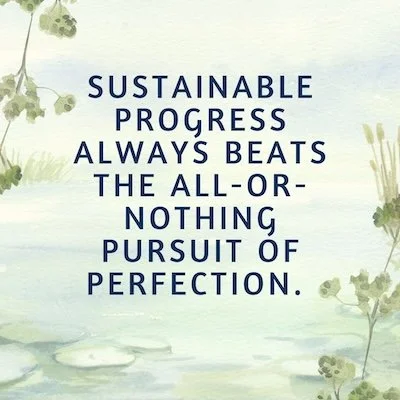
But knowing something and living it are different things. It takes constant intentional focus to remember it. This year, I had to practice what I preach. The post that goes out imperfectly does more good than the perfect one that never does.
That lesson has extended far beyond blogging. It's shaped how I approach my work, my goals, and the grace I try to extend to myself on the days when good enough really is enough.
Lesson 2:
Writing is how you find what you think.
I assumed that to write a blog post, I needed to know exactly what I wanted to say before I started. Most of the time, that's not how it works, at least not for me. I would begin with a topic, a question, sometimes just a single sentence, and somewhere in the process of writing, the point would emerge.
There's something almost counterintuitive about this:
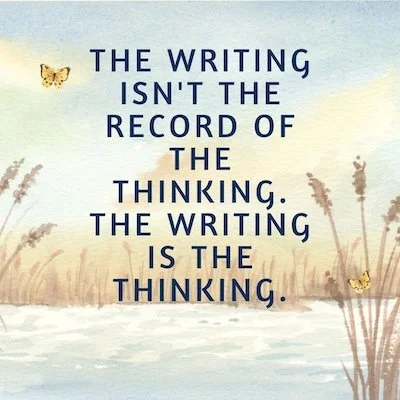
The page is where the idea gets tested, challenged, and sharpened into something worth sharing. If you've ever started something without knowing exactly where it was going, and kept going anyway, you know this feeling. It turns out that uncertainty at the beginning isn't a sign it’s not ready. It's often a sign you're exactly where you need to be.
Lesson 3:
Bridging education and action is harder than it looks, and I'm still learning.
This one is the most honest admission of the three. I am comfortable with the science. I love research, evidence, and the rigor of peer-reviewed literature. What I have always found harder is the translation: taking something complex and true and turning it into something a reader can actually do with their day.
It's a tension I've wrestled with across every post this year. Too much science and it stays in my head, but too many action steps and it loses its depth. Getting that balance of educating without overwhelming, empowering without oversimplifying is a craft I'm still developing it, and probably always will.
What I've come to believe is this:
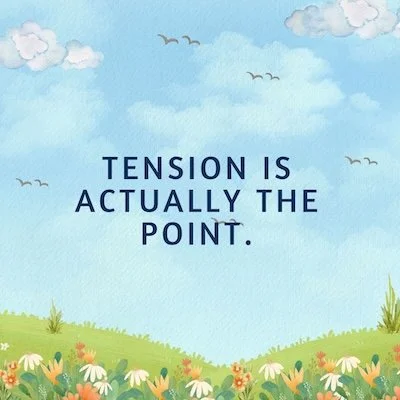
Whole health lives in the space between knowledge and action. The blog, at its best, is a bridge between the two. I don't always build it perfectly, but I keep building anyway.
What matters to you
A year ago today, I wrote about the importance of asking what matters to you rather than what's the matter with you. Looking back, the blog itself has become one of my answers to that question. This work matters to me. I find purpose in the writing, the learning, and the attempt to make complex science feel relevant, human, and actionable.

So if you've been sitting on something like a project, an idea, a version of yourself you've been waiting to feel ready enough to step into, I'd gently offer you the same thing this year gave me: you don't need to have it all figured out to begin. Just begin.