What Stress Actually Does to Your Body (And Why That's the Way Out)

Have you ever been shocked by a surprise? What happened?
Maybe you were jolted by a loud noise or someone jumped in front of you? What about something more serious, like nearly missing a fender bender or almost stumbling and falling? Did your heart beat fast? Did your body muscles tense? Did you stiffen in preparation for an unknown threat? If so, if your body reacted to a surprise, that was anticipation of a possible threat taking over your body, trying to protect you from whatever might be out there.
Stress is often framed in the context of how it effects on our mental health, and it absolutely impacts our mood, our emotions, and our ability to reason, think critically, and analyze. While the two main signals of stress (namely, adrenaline and cortisol) have a profound impact on our minds, they also have profound impacts on our bodies.
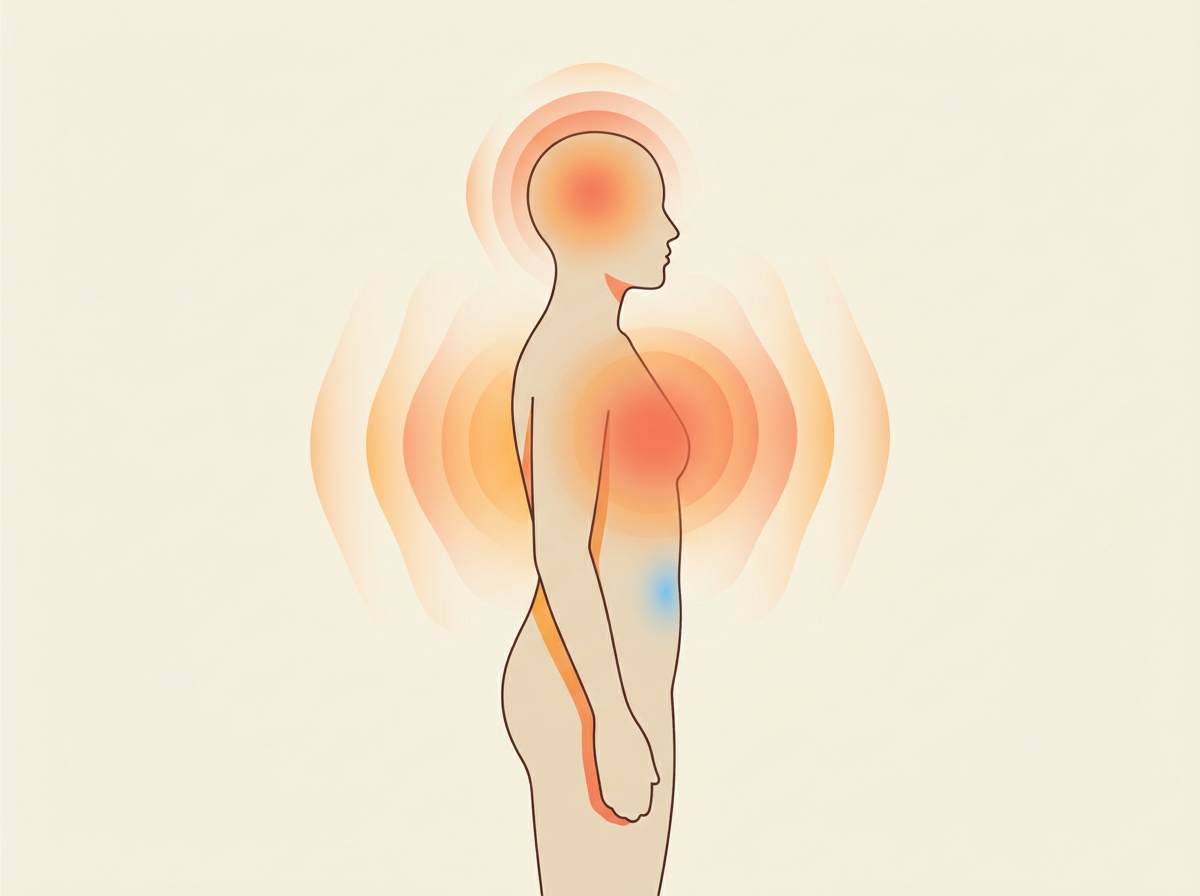
But what about stress that isn’t based on the fear of a potential threat?
Perhaps it was a sudden conflict with a family member or coworker that escalated into an argument. I clearly remember the sudden stress I was under when a pipe burst in the house and water went everywhere. Maybe you’re about to give a speech and the stress of that event comes, you walk out on stage, deliver your presentation, and walk off again.
Our psychologist colleagues would be able to explain in much greater depth how the role of fear in each of these stressful events, and the emotions wrapped up in all of them are complex and experienced by everyone a little differently, but that is a topic for another day. Neither will the impact of chronic stress on the body be explored in this post, which is even more complicated.
Instead, the topic for this post is specifically the role of an acute stress, something that happens and passes as a part of everyday life, and the physical sensations that accompany that event.
A few caveats:
Not everyone will experience all these sensations.
A different combination of sensations may be experienced with each stressor.
This isn’t an exhaustive list of all physical sensations.
A peek under the hood
Musculoskeletal system
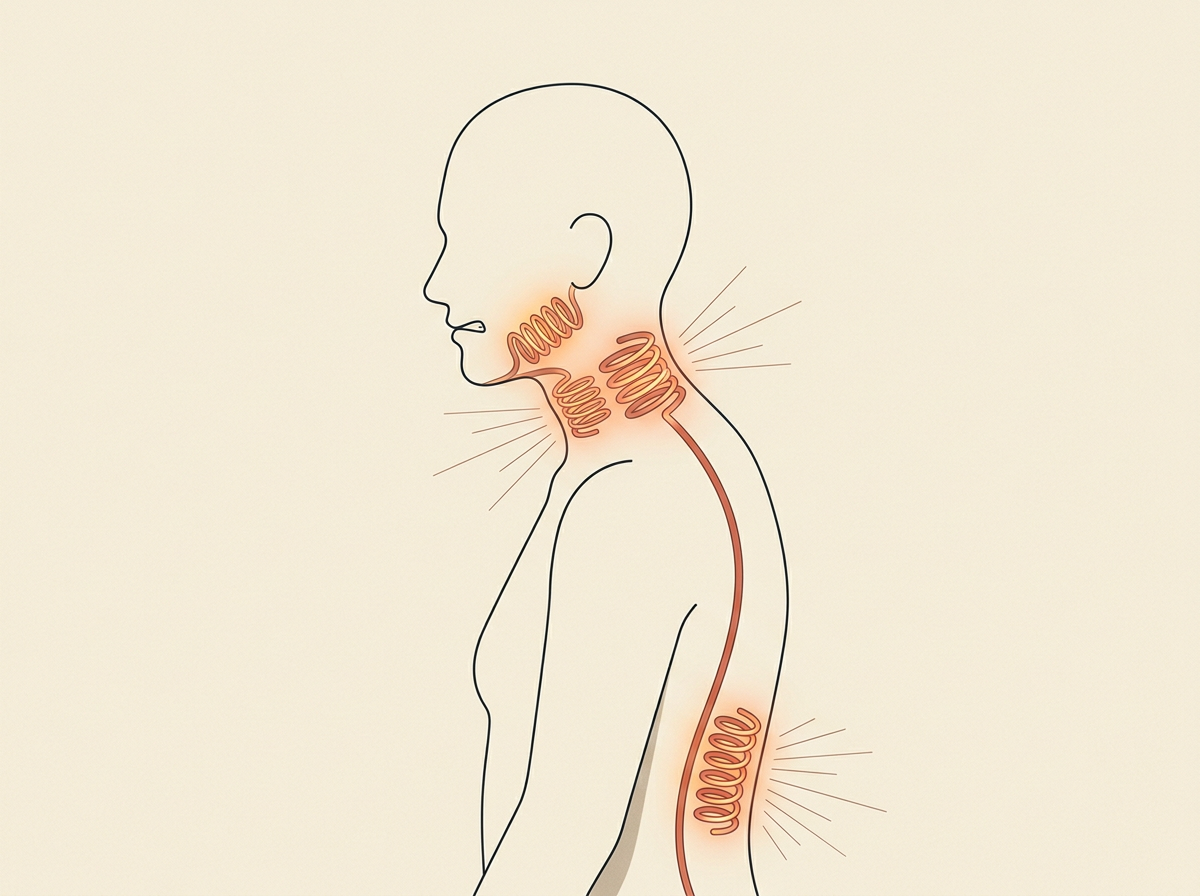
The moment your brain registers a threat and adrenaline hits your system, your muscle fibers turns up their readiness to react. Your alpha motor neurons, the cells that tell muscles to contract, become more excitable. Your muscle spindles, the little stretch sensors inside each muscle, get more sensitive too. The net effect is muscles primed to move fast, whether that means throwing a punch, catching yourself from a fall, or sprinting for a quick getaway. This is good! The problem is when your body doesn't know the difference between a genuine physical threat and an uncomfortable email.
That's why your jaw clenches during an argument you're not even speaking in, why your shoulders creep up toward your ears while you're stuck in traffic, why your lower back tightens before you've even stood up from your desk. The masseter muscles in your jaw and the muscles at the base of your skull tense first, which is why so many of us feel stress as a tension headache before we consciously register that we're stressed at all. Your paraspinal muscles, the ones running alongside your spine, guard and brace, which can show up as back pain hours after the stressful event has technically ended. Even your intercostal muscles between your ribs and the small muscles around your sternum can tighten, which is why some people describe stress as chest tightness or a literal weight sitting on them.
None of this is your body malfunctioning. It's your body doing exactly what it evolved to do: get every major muscle group loaded and ready, just in case you need to run or fight. The trouble is that a heated conversation rarely requires you to sprint anywhere, so all that readiness has nowhere to go. It just sits there until something releases it.
Gastrointestinal and genitourinary systems
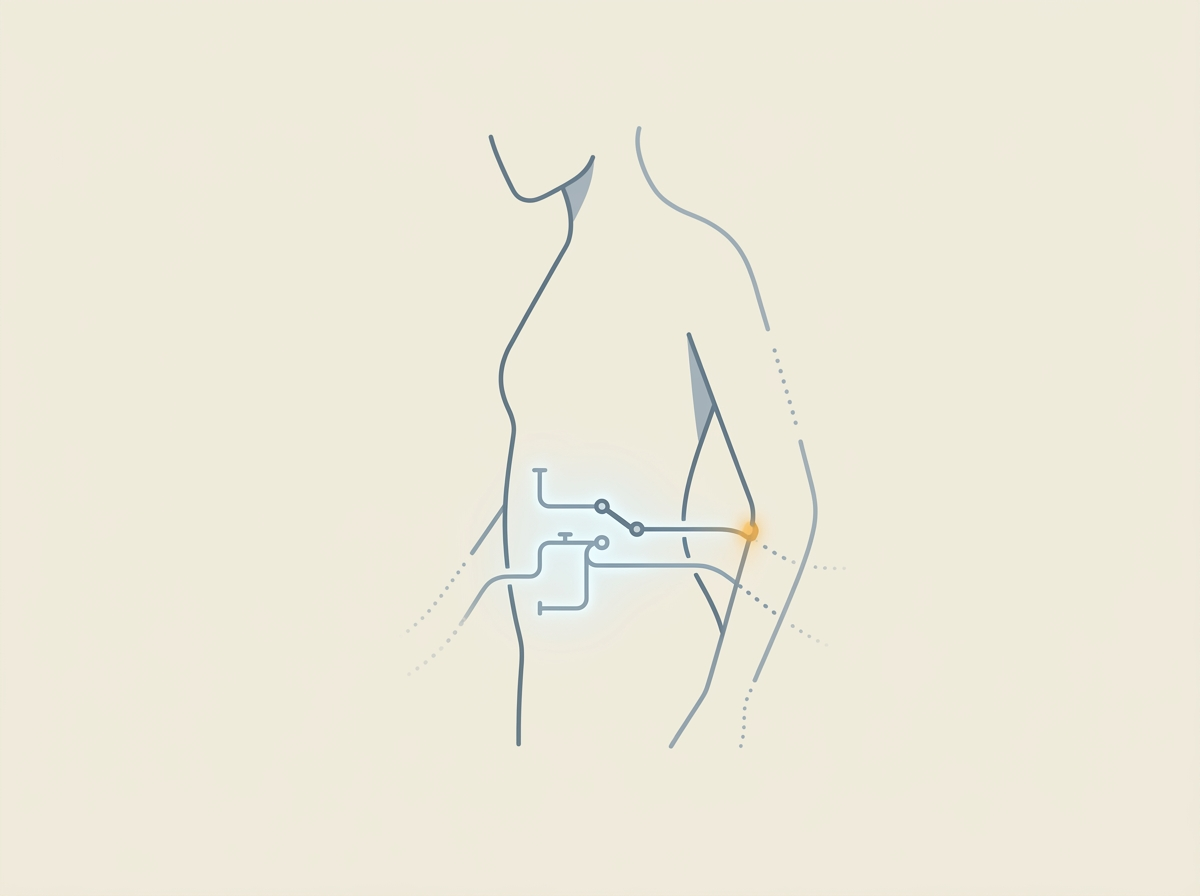
While your muscles are getting primed for action, your gut is being told, quite literally, to stand down. Digestion is energetically and metabolically expensive, and expensive processes re deprioritized the second your body thinks survival is on the line. Blood flow shifts away from your splanchnic circulation, the vessels supplying your stomach and intestines, and gets redirected toward your muscles and brain instead. Less blood to the gut means digestion slows, which is a big part of why stress can bring on nausea or that sudden, unmistakable loss of appetite.
Here's where it gets interesting, though: stress doesn't affect everyone's gut the same way. For some people, that same surge of stress hormones slows things down enough to cause constipation. For others, it speeds up colonic motility and does the opposite, sending them sprinting for the bathroom with diarrhea instead. Reflux can show up too, since stress can relax the sphincter that normally keeps stomach acid where it belongs.
Your bladder gets pulled into this as well. Adrenaline affects the smooth muscle of your bladder wall, and for a lot of people that translates into a sudden, urgent need to urinate right when it's least convenient, like right before you walk into that meeting or right before you're about to speak in public. And your salivary glands, which run on parasympathetic input, the opposite system from the one driving all this, get suppressed. That's why stress can cause dry mouth and the sudden inability to swallow that so many people notice the moment they're about to speak in front of a crowd.
Cardiovascular system
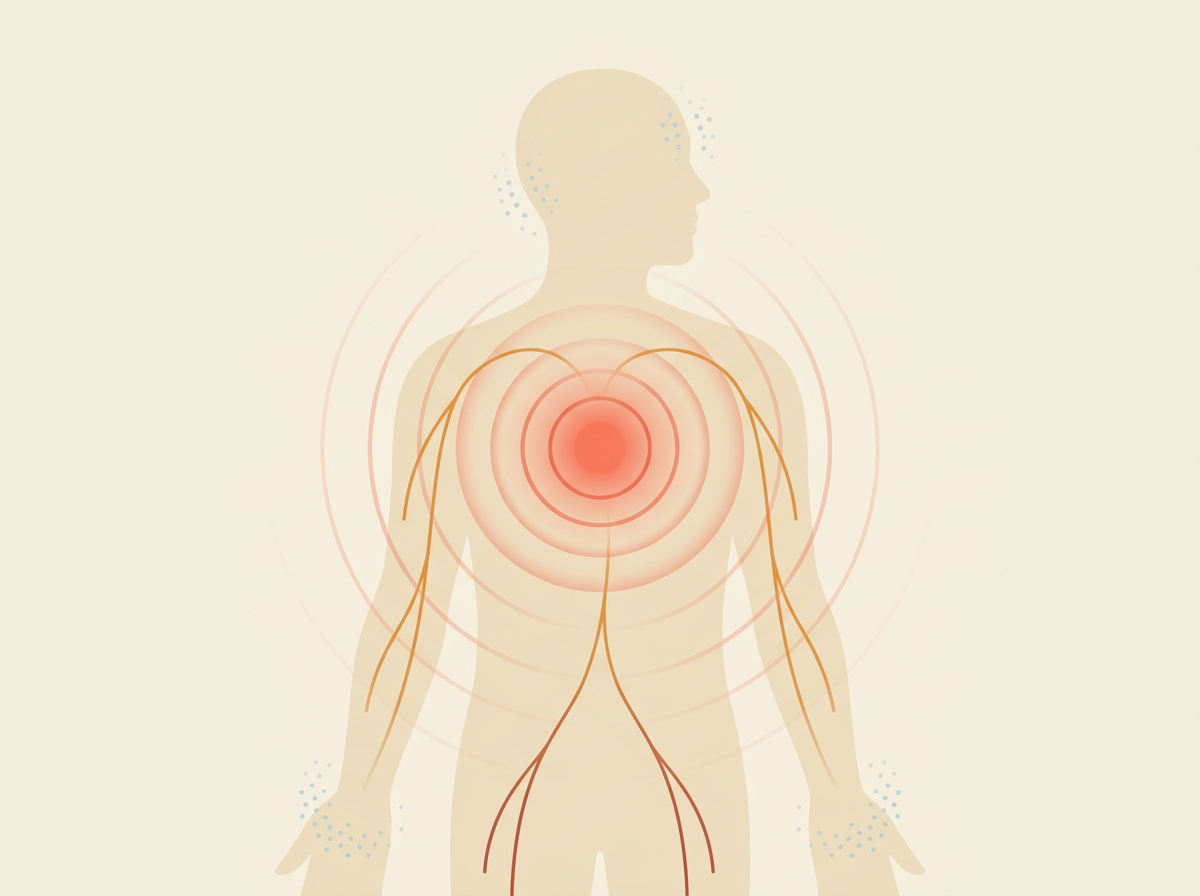
This is the one most of us notice first, because it's hard to miss. Adrenaline and noradrenaline act directly on beta receptors in your heart, increasing both how fast it beats and how forcefully it contracts. At the same time, blood vessels in your skin and gut constrict while vessels feeding your large muscles dilate, which raises blood pressure and reroutes blood supply toward wherever your body thinks it might need to run or fight. It's an efficient, elegant, beautiful system when you step back and look at it. It means that more oxygen and glucose are directed to the tissues that might actually need to act fast.
Sweating comes along for the same ride. Your eccrine sweat glands are activated by sympathetic nerve fibers, and while we usually think of sweat as a response to heat, this kind of sweating is different. It's anticipatory, a bit of a physiological head start on cooling a body that might be about to work hard. Combined with the dry mouth from a moment ago, it's no wonder that classic "cold sweat, dry mouth" combination feels so distinctly like fear.
Why this matters
I wrote this because I think we tend to treat stress like it's something that happens in our heads and merely spills over into our bodies. But if you look at everything above, it's really the other way around. The stress response isn't a mental event with physical side effects; it's a full-body event that happens to include your thoughts.
That matters practically, not just academically (although the biology is fascinating), because it means the door swings both ways. If a stress response can start in your body just as easily as it can start in your mind, then you can interrupt it from either direction too. You don't have to think your way out of an acute stress response. You can breathe your way out of it, by slowing your exhale and telling your vagus nerve the threat has passed. You can unclench your jaw on purpose and drop your shoulders and give your nervous system a data point that contradicts the alarm. You can splash cold water on your face and trigger a physiological reset.
None of these require you to first talk yourself into feeling calmer. It is a little like if we can redirect the body into being calmer, then the mind will follow.
REFERENCES